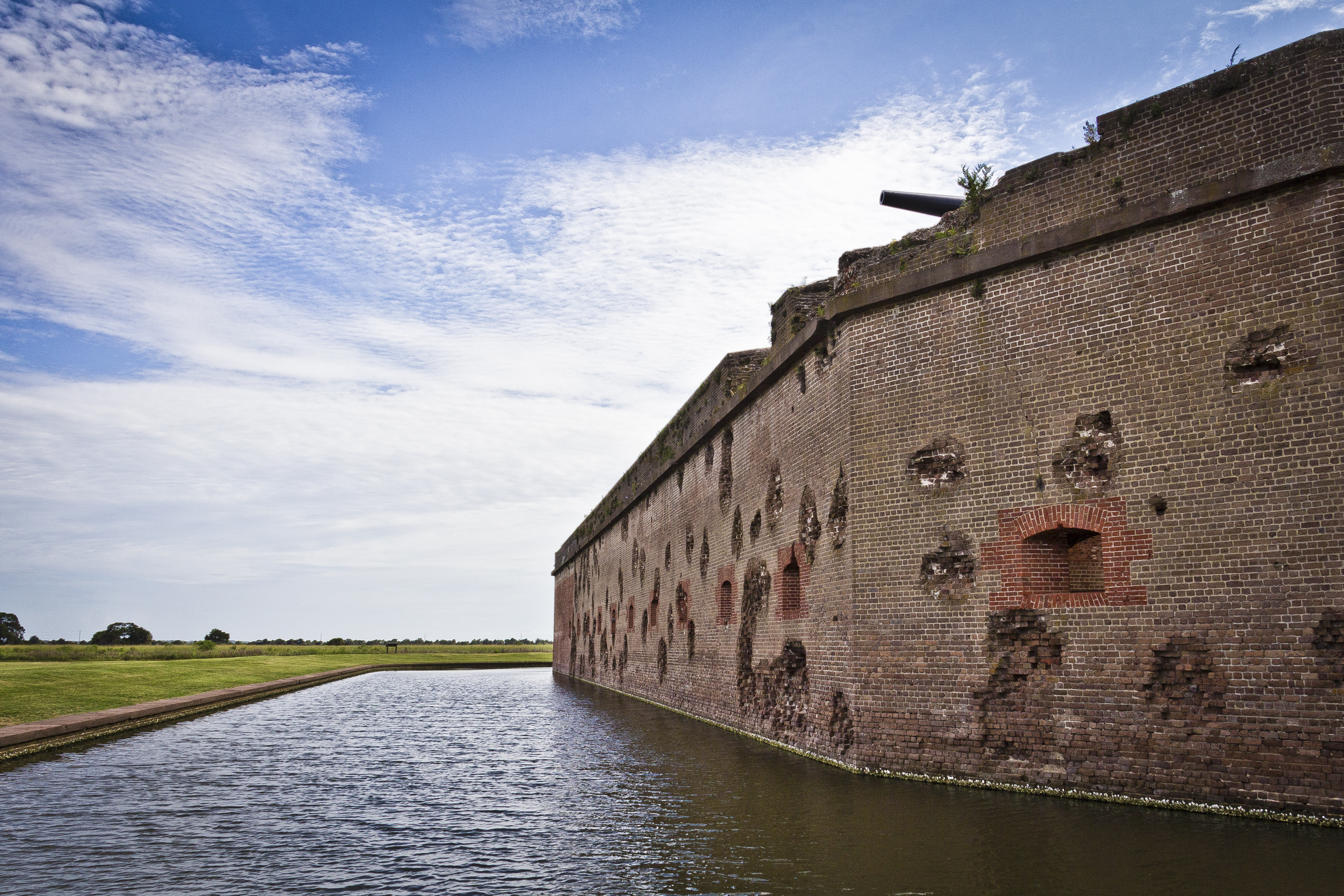
A walk along the outside of Fort Pulaski reveals damaged walls over 150 years after the Civil War.
Photo: NPS Photo / Joel Cadoff
About
For much of the 19th century, masonry fortifications were the United States’ main defense against overseas enemies. However, during the Civil War, new technology proved its superiority over these forts. Using rifled cannons, the U.S. Army compelled the Confederate garrison inside Fort Pulaski to surrender. The siege was a landmark experiment in the history of military science and invention.
Location
101 Fort Pulaski Road
Fort Pulaski Visitor Center
Savannah, GA 31410
Entrance Fees
Entrance - Per Person$10.00
Commercial Entrance - Per Person$10.00
Hours
wednesday9:00AM - 5:00PM
monday9:00AM - 5:00PM
thursday9:00AM - 5:00PM
sunday9:00AM - 5:00PM
tuesday9:00AM - 5:00PM
friday9:00AM - 5:00PM
saturday9:00AM - 5:00PM
Activities
BikingBoatingFishingSaltwater FishingGuided ToursSelf-Guided Tours - WalkingHikingLiving HistoryHistoric Weapons DemonstrationPaddlingCanoeingKayakingJunior Ranger ProgramWildlife WatchingBirdwatchingPark FilmMuseum Exhibits
Directions
From Interstate I-95, take Exit 99 onto Interstate I-16 East (James L Gillis Memorial Hwy) for 7 miles. Take Exit 164A onto Interstate I-516 East toward US-80 East. Take Exit 3 (US-17 S/US-80 E) toward US-80 East. Turn left onto Ocean Highway, Ogeechee Rd (US-17 N, US-80 East). Bear right onto West Victory Drive (US-80 East). Continue on US-80 East for 13 miles. GPS Coordinates for Fort Pulaski National Monument: N32° 01.680 W080° 53.525
Get directions →Weather
Savannah has a humid sub tropical climate with over two hundred days of sunshine each year. Summers are typically hot, bright and humid with afternoon thunderstorms common. Temperatures often range from the lower 70s to the mid 90s F. Spring and autumn can be quite pleasant with temperatures ranging from the upper 50s into the 80s F. The winter months are usually dry. Temperatures can be cooler than one would expect, ranging from the upper 30s through the 60s F generally, though sudden cold snaps can occur.