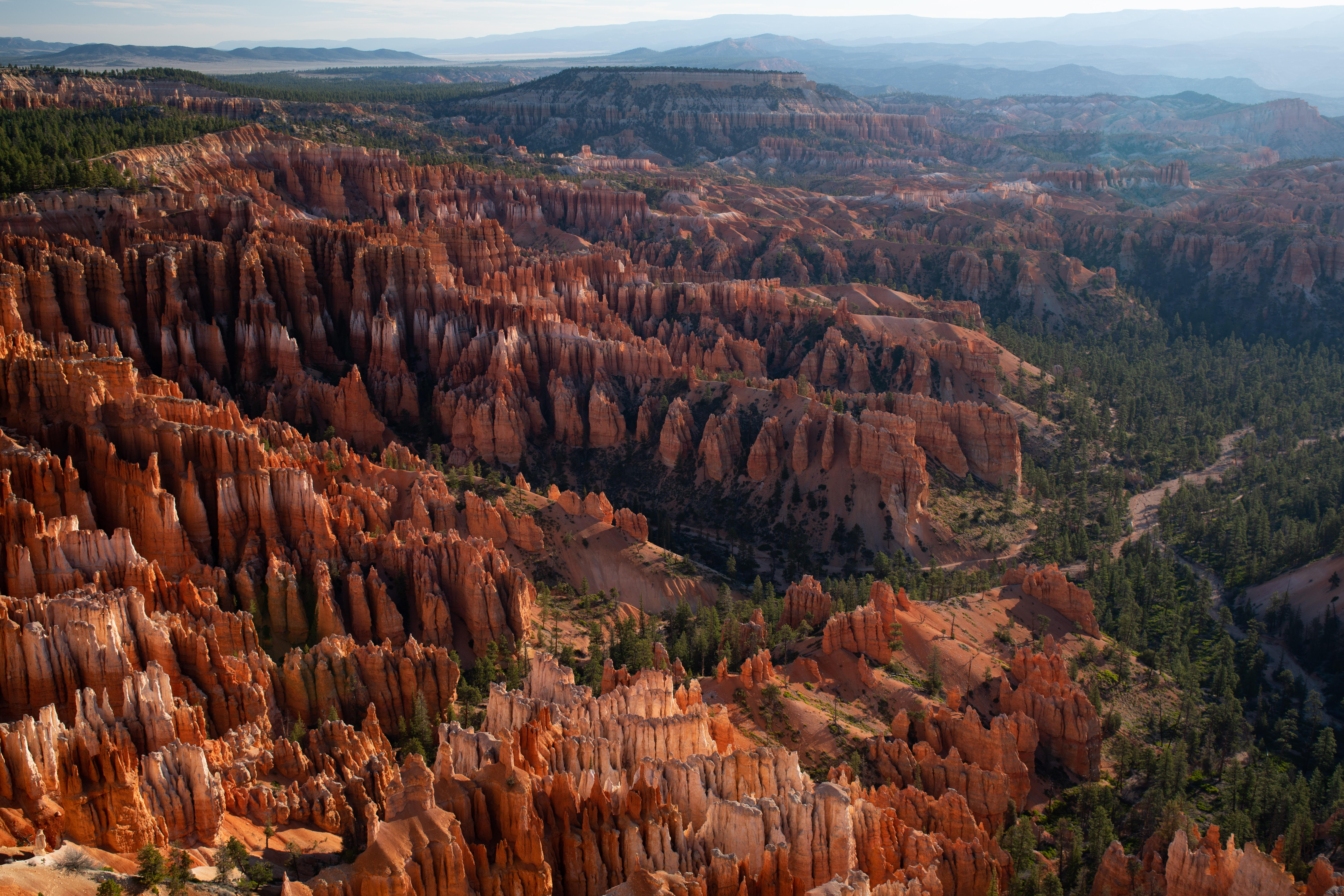
Viewpoints of the iconic Bryce Amphitheater are located along the first 3 miles of the park road and are a popular destination at sunrise.
Photo: NPS Photo / Peter Densmore
About
Hoodoos (irregular columns of rock) exist on every continent, but here is the largest concentration found anywhere on Earth. Situated along a high plateau at the top of the Grand Staircase, the park's high elevations include numerous life communities, fantastic dark skies, and geological wonders that defy description.
Location
Highway 63
Bryce Canyon National Park
Bryce, UT 84764
Entrance Fees
Entrance - Private Vehicle$35.00
Entrance - Motorcycle$30.00
Entrance - Per Person$20.00
Commercial Entrance - Sedan$50.00
Hours
wednesdayAll Day
mondayAll Day
thursdayAll Day
sundayAll Day
tuesdayAll Day
fridayAll Day
saturdayAll Day
Activities
AstronomyStargazingBikingRoad BikingCampingBackcountry CampingCar or Front Country CampingGroup CampingRV CampingFoodDiningPicnickingGuided ToursSelf-Guided Tours - AutoHands-OnCitizen ScienceHiking
Directions
From the North: Take I-15 south to UT-20 (exit 95). Travel east on UT-20 to US-89. Follow US-89 south to UT-12. Travel east on UT-12 to UT-63. Take UT-63 south to Bryce Canyon NP. From the South through Zion National Park: Take I-15 north to UT-9 (exit 16). Follow UT-9 east through Zion National Park to US-89. Travel north on US-89 to UT-12. Go east on UT-12 to UT-63. Take UT-63 south to Bryce Canyon NP. From the East Travel west on UT-12 to UT-63. Take UT-63 south to Bryce Canyon NP.
Get directions →Weather
Due of its high elevation climate, weather at Bryce Canyon through autumn, winter, and spring can be highly variable. From October to May temperatures fall below freezing nearly every night. The park typically experiences its coldest and snowiest periods from December through February. Spring storms in March and April can still produce heavy snowfall that may impact travel in the region. Summer highs are typically in the 70s-80s F and afternoon thunderstorms are common in July and August.